Showing posts with label Ancient History. Show all posts

Monday, February 27, 2012

Makeda by Prue Sobers

A novel inspired by a medieval text and its ancient tale of sexual conquest by Australian best-selling author, Prue Sobers. 

A woman stands in a hooded cloak, feet drenched and muddied, at the entrance of the great hall as thunder reverberates through the palace walls. In the gloom he cannot see her clearly. It is before the Common Era, the year 961. He is Solomon the Wise, thwarted by protocol, impatient for his work. She is the beautiful and spirited Makeda, Queen of Sheba and all Ethiopia who has risked life and limb in a bid to talk trade. Against a glittering backdrop of pomp and opulence, and the shadows of slavery and the politics of the times, as strangers, they embark on an uncharted course.


She is not what he expects and takes him by surprise. He is everything she has heard. Behind the closed doors of privilege and power, both are about to face more than they bargain for.


Brimming with imagery, taut with intrigue, Makeda is a light with incident and glamour. In her compelling novel of obsession and self-discovery, Prue Sobers brings to life two of the world’s most illustrious icons, rendering them enthralling in all their dazzling otherness, yet as human and palpable as legends of our day. Feisty and engaging, the novel takes the reader into the minds of its characters, foiling all the energy of sovereignty and might with the exquisite eroticism of attraction and desire. Emotionally rich and evocative, this bitter-sweet story of moral dilemma, grand passions and sacrifice will tug whimsically on the strings long after it is read.


From its beautiful front cover and lovely prose within its pages, the novel Makeda definitely drew me in and swept me back into ancient history. It is the heated love story between King Solomon and Makeda, Queen of Sheba, both powerful, wealthy leaders in their own lands.

Within its pages, author, Prue Sobers, deftly tackles powerful subjects such as slavery and oppression by weaving Makeda’s life story and detailing the splendid romance that unfolds between her and Solomon. The author writes with great skill, gentle clarity, and avid enough descriptions to truly give readers a strong sense of the era.

I enjoyed Makeda’s talent to verbally spar with Solomon, impressing instead of offending, fascinating instead of angering. She was a woman of great resilience, courageous enough to speak her mind and unafraid to act on her moral ethics. Makeda is a true heroine, one who has transcends time, whereby her dignity and brilliance fascinates to this day. A wonderful biographical historical novel!

Saturday, January 7, 2012

The Year-God's Daughter by Rebecca Lochlann


Review by Lavender Ironside

Set amongst the mystery of the Minoan Labyrinth and the heart-pounding thrill of the bull-dancing ring, The Year-God’s Daughter is the first volume of The Child of the Erinyes, a sweeping epic of a series spanning time from the Bronze Age to the near future. 

In Rebecca Lochlann’s first novel, we are introduced to Aridela, a young priestess and princess – and to the mysteries of Athene, the inscrutable goddess whose hand guides Aridela’s fate.  Aridela is the youngest daughter of the queen of Kaphtor (Crete).  She was born under portentious circumstances and has grown up revered and pampered in her mother’s palace.  She is headstrong and strangely wise for her age, seemingly born to rule – yet her meek elder sister IphiboĆ« is the heir to Kaphtor, and Aridela is pledged to a life of celibacy and service to the goddess Athene.

This novel, being the first in a long series, is largely set-up for events to come; yet The Year-God’s Daughter is packed with plenty of action.  As the groundwork is being laid for the rest of the series, the reader follows Aridela through her coming-of-age – and follows, too, the lives of the people she touches, whose fates are altered by contact with this young woman chosen by Athene: IphiboĆ«, Themiste the high priestess, Selene the foreign warrior-woman, Lycus the bull-dancer, and more fascinating characters are subtly moved like pawns on a game board by Aridela’s unknowing influence. 

Most notable on the list of characters entwined with Aridela are Menoetius and Chrysaleon, half-brothers and sons of the king of Mycenae.  They are sent on a mission by their power-hungry father to discern Kaphtor’s weaknesses so that Mycenae might take control of the rich island nation.  But both brothers soon find themselves in love with Aridela…and at one another’s throats. 

The depth of historical information in this novel will delight fans of the genre.  A surprising amount of history and archaeology has been slipped unobtrusively into the narrative.  Lochlann has clearly done an astounding amount of research into her historical setting and culture, yet she never overwhelms the reader with specifics, nor does she lecture.  The conveyance of historical facts and archaeological tidbits feels very natural, woven deftly into the dialogs and thoughts of her intriguing cast of characters.

The primary strength of this book is the writing itself, which I can only describe as sumptuous.  Lochlann has a great flair for sensory detail and fills her novel with such a wealth of sights, sounds, smells, and flavors that the reader feels absolutely immersed in the world of ancient Crete from the first page.  Reading The Year-God’s Daughter is a delicious experience – seldom have I read a historical novel with such a well-drawn setting, and the fact that this book is independently published makes the feat all the more remarkable.  The rare grammatical gaffe occasionally pulled me out of the tale, but never for more than a moment – and while I often found myself wishing I understood some characters’ motives better, I have to assume that, since this is the first in a series with extreme scope, more will be made clear as the series progresses.  In any case, the luscious sensory prose was more than enough to keep me reading,  and has left me eagerly awaiting the next installment.


Cover copy:

Crete: A place of magic, of mystery, where violence and sacrifice meet courage and hope.

Aridela: Wrapped in legend, beloved of the people. An extraordinary woman who dances with bulls.

The north wind brings a swift ship and two brothers who plot Crete's overthrow. Desire for this woman will propel their long rivalry into hatred so murderous it hurtles all three into an unimaginable future, and sparks the immortal rage of the Erinyes.

A woman of keen instinct and unshakeable loyalty. A proud warrior prince and his wounded half-brother. Glory, passion, treachery and conspiracy on the grandest scale.

What seems the end is only the beginning.

The Year-God’s Daughter:  Book One of The Child of the Erinyes by Rebecca Lochlann, published by Erinyes Press, 2011.  279 pages.  Available in Kindle, Nook, and other electronic formats.  Also available in paperback.

Tuesday, December 27, 2011

Vestal Virgin by Suzanne Tyrpak


A priestess in Nero’s Rome discovers hidden truths aboutfaith and herself, in Suzanne Tyrpak’s Vestal Virgin. The Emperor dictates the fate of Rome citizens, but when thepriestess Elissa Rubria Honoria rejects his manipulation, a chain of events followthat endanger Elissa and everyone she cherishes. As calamities befall her, shealso uncovers long-buried secrets about her past.

In Elissa’s childhood, her parents surrendered her to the careof the Vestal Virgins, honored women bound by vows of chastity to serve the Romangoddess of the family and family.  WhileElissa did not willingly accept the burden, she achieves a semblance ofsecurity and comfort in later years. Her carefully scripted life begins tounravel when she learns that her brother Marcus faces an accusation of treason.Elissa knows the Emperor Nero is a capricious and dangerous man, but in herdesperation, she believes she can save her brother. She rushes off to the CircusMaximus, where Nero has ordained Marcus’s death as a spectacle for Rome’scitizens. On her journey, Elissa meets a stranger whose prophetic vow willhaunt her. Though Nero toys with Elissa upon her arrival, it is soon clear thathe does not intend to release his victim. Afterward, Elissa begins to question thewill of the gods, who have allowed Nero’s cruelty to go unchecked.

As a Vestal, Elissa has sacrificed a future with the soldierJustinus, but it seems she will have to endure much more given the loss of herbrother. Her family remains subject to the Emperor’s whims, especially heryounger sister Flavia, who seems to have caught Nero’s eye. It is a horrifyingprospect for Elissa and the Empress, Poppaea Sabina. Where Elissa is selfless,Flavia’s selfishness threatens to embroil the family in Nero’s schemes. TheEmperor, who once deemed Marcus and Justinus his friends, has grown into a paranoidmonster, leaving Justinus fears for his life. Through him, Elissa makes a connectionwith Paul of Tarsus, one of the followers of Jesus, an act with graveconsequences for everyone involved. As Elissa tries to reconcile her faith withthe tenets of the new religion, Nero, Flavia and Poppaea pursue their ownschemes, each of which will ruin Elissa’s former contentment, but also aid herin uncovering an unexpected connection between her and the Emperor.

The authenticity with which Ms. Tyrpak writes about ancientRome will make readers feel as though they are walking the crowded, smellystreets or mingling with the masses in the arena.  Her character portrayals reveal flawed andmisguided individuals, who are also sympathetic even at their most foolish. Theauthor does not shy away from the reputed cruelty and vagaries that the EmperorNero displayed during his lifetime, and she succeeds in making him a powerfulantagonist, even when he seems comical. There are hints of sexual perverseness,but nothing too explicit. While I won’t give away the ending, it felt as thoughsome of the conflicts remained unresolved. I’m pleased to hear that there is asequel to Vestal Virgin.      

Friday, November 25, 2011

Song of the Nile by Stephanie Dray

Song of the Nile - A novel of Cleopatra's daughter and interview with Stephanie Dray!


Synopsis

Sorceress. Seductress. Schemer. Cleopatra’s daughter has become the emperor’s most unlikely apprentice and the one woman who can destroy his empire...

Having survived her perilous childhood as a royal captive of Rome, Selene pledged her loyalty to Augustus and swore she would become his very own Cleopatra. Now the young queen faces an uncertain destiny in a foreign land.

Forced to marry a man of the emperor’s choosing, Selene will not allow her new husband to rule in her name. She quickly establishes herself as a capable leader in her own right and as a religious icon. Beginning the hard work of building a new nation, she wins the love of her new subjects and makes herself vital to Rome by bringing forth bountiful harvests.

But it’s the magic of Isis flowing through her veins that makes her indispensable to the emperor. Against a backdrop of imperial politics and religious persecution, Cleopatra’s daughter beguiles her way to the very precipice of power. She has never forgotten her birthright, but will the price of her mother’s throne be more than she’s willing to pay?

Review

Song of the Nile is the much-anticipated second book of a trilogy based on the life of Cleopatra’s and Mark Anthony’s daughter, Selene. This novel, however, easily stands on its own and it is not necessary to have read the first book in order to fully enjoy this one, but you’ll definitely want to collect all three books in the series.

As queen of Mauretania, Selene continues her efforts to reclaim her mother’s throne of Egypt. Like her mother before her, Selene is a shrewd young woman and must use her wits against the cunning strategies of Caesar.

Author Stephanie Dray did a splendid job of recreating Selene from vulnerable young woman to woman of great strength. The characters are complex and intriguing, at times likeable and at other times detestable. And that’s what made them so believable. Although the novel closely follows historical facts that are known about Cleopatra Selene, the author has believably filled in what was missing with vibrant detail and additional conflict that truly brings the story to life.

Delicious prose, an exotic setting, and a heroine that will impress you with her unfailing courage and determination to reclaim what was once hers, are elements that make this book worth reading. It is historical women’s fiction at its finest and I recommend you get both Lily of the Nile and Song of the Nile so you can follow the trilogy from start to finish.

An Interview with Author Stephanie Dray


1. Welcome, I'm so glad to have this opportunity to chat with you. Can you share with my readers the essence of the story you've penned?

Thanks so much for having me here. The honor is all mine!

Song of the Nile is the story of Cleopatra’s daughter, a little girl who was orphaned and taken away from the only home she’d ever known, marched through the streets of Rome as a captive prisoner, and raised by the very people who killed her family. That she was able to carve a future for herself out of that horrific past, by endearing herself to her parents’ enemies and keeping quiet about her true feelings, is a testament to her strength. However, it also meant that she was deprived of a true voice most of her life. I try to give that voice back to her.

2. You've chosen a very interesting title. What inspired the title? What inspired the book?

The original title for this book was Sorceress of the Nile because I wanted to get across that the Romans were so suspicious of Egyptian magic and they feared it in the hands of a woman. My heroine is as feared for her association with magic as for her actual wielding of it. The publisher thought the title was too much like fantasy, so we changed it to Song of the Nile which is just as appropriate because Egypt sings to my heroine and tries to lure her home.

3. What makes this book special to you?

This is a book that delves deep into the human heart and goes very dark places. Cleopatra Selene lost so much in her life--she suffered unimaginable tragedies by the time she became a bride at just fourteen years old. Exploring how it is that she was able to put her life back together to become one of the greatest queens in the ancient world was truly an honor for me. And an inspiration.

4. What makes this a book that people MUST read and WHY?

I think Selene’s story will help every woman find her own inner goddess to guide her. Moreover, Selene’s story is a lesson to us that the progress of women’s liberation has not been a straight line; there have been setbacks in the past and there may be setbacks in the future. We should be wary of them even now.

5. What sparks your creativity? Any tips to help others spark their own creativity?

Reading books! I learn so much from how other writers have tackled problems that I’m always inspired. Also, meeting with other writers at conferences always leaves me ready to go.

6. What has been the biggest stumbling block in your writing? Can you share some tips to help others get past similar problems?

This book was difficult for me to write for a couple of reasons. The first reason was that I knew it was going to be controversial; it’s darkly beautiful. I’m exploring cultural issues that would have been normal for Selene, such as slavery, rape and incest. But these things shock the modern senses. And they should shock us. But we have to know where we came from to understand where we are. I had to just swallow my fear and let some like-minded readers see the early drafts of the book so that I could have more confidence in what I was doing. Having that early feedback that this book was stronger than the first...that helped me persevere. The second reason it was difficult for me is that it is such an emotional story. To create this character, I had to channel her a little bit. I had to imagine how difficult and painful her life might be. I cried more than once writing this novel, but by the end, I was also filled with joy.

7. Tell me about the most unusual things you have done to promote your book?

Oh, the crazy things I’ve done! I suppose the wackiest is that I started making Egyptian-themed jewelry to give away with my books.

8. Each author is different in the way they create a work of fiction. Please describe for us how you plan or plot a story.

For starters, I create a giant timeline of known historical events. Then I stare at the timeline a lot, as if I can divine a pattern from it. I ask myself what themes suggest themselves from the historical record. Is this a time of recklessness when people are making fatal mistakes? Is there a slow and steady march to power? What’s the arc of this person’s life and can it be twisted into a story that follows any kind of journey? When I stared at the timeline of Cleopatra Selene’s life, I saw that it was inextricably wound up with Augustus. She lived at his sufferance. She ruled for his pleasure. But all the while, she did these little things to assert her independence and to memorialize her dead. She commissioned coins honoring her dead mother that could have created trouble for her with the emperor. She built temples to her forbidden goddess. She named her son after her lost dynasty. This suggested to me a woman who suffered from survivor’s guilt, so I used that to start filling in the holes in the historical record.

9. Authors are very unique in the way they write, the tools they use, when they write, etc. Please describe a typical writing day for you? How do you organize your day?

I use two tools for historical fiction. The first is a timeline program called Aeon Timeline and I’m desperately glad for it because math has never been my strong-suit. This program helps me keep track of the ages of my characters when certain things are happening--not to mention the events themselves. The second program I use to write is called Scrivener. It allows me to keep all my notes and research in one convenient place. I’m so dependent on it, I’m not sure I could write without it anymore! As for the structure of my day, it used to be that I’d get up, get coffee, start writing and not stop until I’d hit my word count. Lately, marketing and promotional activities have started to get in the way. I wake up, take care of urgent emails, figure out if there are any outstanding obligations I might have--books to send out, people to thank, tweets to send, etc. This takes up far more time than it should and I’m recently considering whether or not simply withdrawing into hermit land would not be a better approach.

10. What is your current work in progress?

I’m in the midst of writing the third and final book in the Nile trilogy about Cleopatra Selene’s life. This will cover the meat of her career as a successful ruler, all her amazing accomplishments, not to mention her legacy as a mother and as the last Ptolemaic queen. It’s also my last chance to say goodbye to her, so it’s been fairly emotional writing it.

11. Can you tell us where to find more information about you and your books and how readers can reach you?

I really hope readers will subscribe to my very infrequent, but always informative newsletter. I like to include recipes from ancient history, little known facts, recent discoveries about women in history, and the occasional update about my books. Also, I give out free stuff to subscribers every time I send out the newsletter and who doesn’t want free books? If folks want to find me online, however, I tweet as stephaniehdray and I’m reachable through my website at StephanieDray.com.

I love when folks stop by and tell me their thoughts on my books.

12. What would you like our readers to know about you and your writing?

My style is very allegorical. I take the historical record, then I infuse it with mythology. I do this because even though history is interesting all on its own, I want to make sense of these events for their symbolic import. This is why readers will find themes such as the divine feminine sprinkled throughout my work and why fantasy elements creep into an otherwise faithful historical narrative.

Thanks so much for having me here today!

About Stephanie…

Stephanie graduated with a degree in Government from Smith, a small women’s college in Massachusetts where–to the consternation of her devoted professors–she was unable to master Latin. However, her focus on Middle Eastern Studies gave her a deeper understanding of the consequences of Egypt’s ancient clash with Rome, both in terms of the still-extant tensions between East and West as well as the worldwide decline of female-oriented religion.

Before she wrote novels, Stephanie was a lawyer, a game designer, and a teacher. Now she uses the transformative power of magic realism to illuminate the stories of women in history and inspire the young women of today. She remains fascinated by all things Roman or Egyptian and has–to the consternation of her devoted husband–collected a house full of cats and ancient artifacts.

Berkley Trade October 2011 (Trade Paperback)
# ISBN-10: 0425243044
# ISBN-13: 9780425243046

Purchase Info

Amazon
Barnes and Noble
IndieBound
Borders
Constellation Books
Powell's


I LOVE COMMENTS
Share/Bookmark

Saturday, November 12, 2011

Once A Goddess by Sheila R. Lamb

An exciting debut novel about Ancient Ireland


Two tribes battle for control of ancient Ireland, and Brigid must find her place among them, trapped between the will of her people and the desires of her heart.

For the sake of peace, Brigid of the supernatural Túatha dé Danann enters into an arranged marriage with Bres, the next chieftain of the enemy Fomorian tribe, whose iron weapons and brute strength challenge the Danann magic. The Danann instruct Brigid to spy for them, and to keep the source of their powers secret, dangerous tasks that complicate her goal of making the best of her forced union.

Sacrificing her own hope for love, Brigid faces the Fomorians alone. She must confront her rival, Morrigan, who competes for Bres's affections, as she begins to suspect that he is breaking the truce through lies and political manipulation. When his tyranny threatens the very existence of the Danann, Brigid must risk her life to unseat Bres from power.

Set in a time when myths were reality, Once A Goddess brings the legend of Ireland's magical Túatha dé Danann to life.

I enjoy historical fiction because a story can sweep me into foreign lands and eras in the past I know little about. Once A Goddess, by Sheila R. Lamb introduces to three sets people named the Túatha dé Danann, the Fomorians, and the Fir Bolgs in ancient, mythological Ireland.

From the moment I began reading, the rich prose set a vivid picture and endeared me to Brigid, a young woman obligated to marry Bres, the future chief of an enemy tribe, in order to keep peace between them. But she is expected to spy and report findings to her village leaders. As she adjusts to the foreign ways of her new village, Bres is a good husband. But soon, dark secrets arise to threaten their peace. Thrust into a near impossible situations, Brigid must make some hard choices, and it is this, in addition to the tantalizing way in which the author reveals the secrets, that drives the story.

Unrequited love, passionate liaisons, lies and deception, treachery and betrayal line this novels pages. It is an emotionally provocative and compelling story and I enjoyed the exotic setting and adventure this story offers. A unique book worth reading and highly recommended.

Tuesday, November 1, 2011

Asenath by Anna Patricio


Two Destinies...One Journey of Love. In a humble fishing village on the shores of the Nile lives Asenath, a fisherman's daughter who has everything she could want. Until her perfect world is shattered. When a warring jungle tribe ransacks the village and kidnaps her, separating her from her parents, she is forced to live as a slave. And she begins a journey that will culminate in the meeting of a handsome and kind steward named Joseph Like her, Joseph was taken away from his home, and it is in him that Asenath comes to find solace...and love. But just as they are beginning to form a bond, Joseph is betrayed by his master's wife and thrown into prison. Is Asenath doomed to a lifetime of losing everything and everyone she loves?

New author, Anna Patricio has written an engaging Biblical biographical novel of high adventure and passionate love amid the turbulent world of Ancient Egypt. Asenath is the biographical story about the life of Asenath, the wife of Joseph of the coat of many colours.

Asenath's real name was Kiya and she was born to a happy family who lived on the banks of the Nile. One day, her village is invaded, her parents killed, and she is separated from her siblings. Kiya survives but is captured and forced into slavery. When Egyptians rescue her, she is brought to the temple of Atum-Re and begins training as a priestess. It is then that she meets Joseph, a most handsome, desirable young man, but a man considered beneath her because of his status as a Hebrew slave. When she marries him, her life is pushed into turmoil and catapults the novel into wonderful scenes filled with tension and conflict. 

Written in first person narrative in Asenath’s voice, it is a compelling story, nicely researched, and well written. For a first novel, it is an impressive effort. The novel is geared toward the Young Adult market, but I recommend it for adults too. On rare occasions, the author slipped into modern vernacular, which pulled me from the story a bit – something that should have been caught and corrected by the editor. However, as I said, this didn’t happen often and it certainly did not keep me from enjoying the story.

All in all, this was a terrific debut novel and a compelling story, recommended for anyone who loves to be swept into fascinating, ancient eras. Anna Patricio has great promise and I look forward to following her career.

Monday, September 12, 2011

A Reluctant Queen: The Love Story of Esther by Joan Wolf

A Reluctant Queen: The Love Story of Esther

You've read it as a biblical tale of courage. Experience it anew as a heart-stirring love story. An inspired re-imagining of the tale of Esther, a young Jewish woman thrust from a life of obscurity into a life of power, wealth, intrigue . . . and tender love. Imagine anew the story of Esther, one of our faith's great heroines, destined to play a key role in the history of Christianity. She was a simple girl faced with an impossible choice. He was a magnificent king with a lonely heart. Their love was the divine surprise that changed the course of history. The beloved story of Esther springs to fresh life in this inspired novel that vibrates with mystery, intrigue, and romance. See the story of Esther in an entirely new way-with all the political intrigue and tension you remember, but told as a passionate and tender love story between a young man and woman. Misunderstood by many, King Xerxes was a powerful but lonely man. Esther's beauty caught the eye of the young king, but it was her spirit that captured his heart. 

The story of Esther in the Bible is inspirational. In the year 485 BC, Esther is a young Persian woman with Jewish roots. When the King of Persia repudiates his first wife, Vashti, he begins a search for a new wife. Young women from all corners of the kingdom eagerly attend hoping to be the one the king will choose. Although unwilling at first, Esther’s guardians encourage her to vie for his attention so that she might influence him to keep the Jews from destruction. Esther enters the harem, and much to everyone’s surprise, it is she who fascinates the King and ultimately wins his heart. However, she must keep her Jewish roots a secret from her new husband, at great risk to herself.

In A Reluctant Queen: The Love Story of Esther, author Joan Wolf gives a fascinating recounting of this intriguing Bible story. She writes in an easy to read, unencumbered style that allows you to fall into the story easily. I enjoyed the story very much. The beautiful cover art drew me to the novel, but it was the story and easy prose that kept me turning pages. The love story between Esther and the King was brilliantly depicted, as was all the intrigue and power struggles. Esther is an endearing character who goes against all Jewish practices to live an opulent life, very different from the simple life she is used to. This is great Christian fiction – tale of destiny and courage, and sweet love.

Tuesday, July 12, 2011

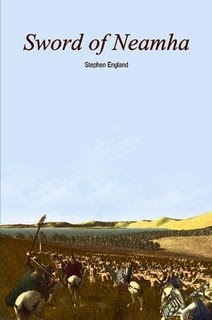
Sword of Neamha by Stephen England


In Stephen England’s the Sword of Neamha, Cadwalador of the Aeudi tribe sets out from northern Gaul with his beleaguered people, fleeing from certain annihilation by other tribes. Life takes him on an unexpected adventure. He makes fateful choices that determine his destiny and ensure the fate of his people.


Cadwalador is a young man in the service of a Gallic chieftain, who is heir to the leader of the Aeudi. The tribe is under siege and flees their shores, intent on conquering the land of Erain (Ireland), with stops along the way on the island of tin (the future Britain). Cadwalador’s chieftain inspires others to flow his banner, with two fatal weaknesses: his love of strong drink and his ruthless ambitions. He is a dangerous man, made even more so when he is drunk. He earns the enmity of one of the mercenaries in his service, Cavarillos, after an ill-advised attack on a village sees scores of Aeudi die needlessly. Cadwalador counted Cavarillos among his friends, but the two have a bitter parting when the young man chooses his chieftain’s life over helping his friend. It is a decision that will shape Cadwalador’s life. He pays a heavy price for his loyalty and, in the end, loses more than he expected. He also helps forge a powerful legend across the land, but with ruthless enemies closing in on all sides, it’s not always certain that legend will be enough to win the day.  

Several elements stood out in this story. Despite the foreign and often un-pronounceable Celtic names, there were familiar themes. There is the flush of first victory and first love, as well as bitter treachery and defeat, enough to entertain historical fans who like gritty action. The scenes are visceral. There’s blood and guts everywhere. The action never stops, even in what should be quiet family moments for Cadwalador. Of all the things I admired about Mr. England’s style, it was the way in which he creates sympathy for his characters, especially those who at the outset don’t seem to deserve it. Even his villains have justifiable reasons for their murderous nature. The Sword of Neamha is a fascinating read for anyone who like historical fiction set in the Celtic or early Britannic period, or those who enjoy epic battle scenes and action that propels the characters through upheaval and triumph.        
Available at Smashwords, B&N and Lulu. Also,  


Friday, July 8, 2011

Award Winning Historical Fiction - The Swords of Faith by Richard Warren Field

THE SWORDS OF FAITH

Bronze Medal, 2011 Independent Publisher Book Awards
Finalist, USA Book News Award for Best Books of 2010/Historical Fiction Category
Finalist, International Book Awards, Best Books of 2011/Historical Fiction Category


About a year ago, I had the pleasure of reviewing The Swords of Faith by Richard Warren Field. When I read it, I was fully enchanted by the book. Well, actually, "blown away" would be a better way to describe my feelings for it. Its phenomenal success since writing my review is proof that it really is as good or better than I said it was. 

Since then, I'm so pleased to let you know it's won numerous awards. I'm especially proud of the book and even more so because I had the pleasure of working with the author, Richard Warren Field, when he was writing the book and posting chapters to our on-line critique group called Historical Fiction Writers Critique Group.

I'm so pleased to host the author here today as part of his blog tour and bring this book back to the forefront of my attention. Richard has kindly offered to speak about the benefits and pitfalls of critique groups.  

A warm welcome, Richard! 


Richard Warren Field

I want to thank Mirella Patzer for having me back, about a year after I first appeared here for an interview, right after my novel The Swords of Faith was released. I am pleased to return with a bronze medal from the 
Independent Publishers Book Awards, and full of gratitude for Mirella’s early support. My publisher, Strider Nolan Media, quoted her review on the cover!  (“Meticulously researched…  Field’s passion for this period in history is clearly evident on every page.”) By the way—a plug for my publisher—StriderNolan Media also won an Independent Publishers Book Award in 2009. (Well, they know how to pick’em. ☺)


But maybe the most important support I received from knowing you was through your critique group. That’s what I’d like to talk about today.

I recently attended the Historical Novel Society North American conference in San Diego. I met writers at different levels, some just getting started, grateful to find a place where the writers all love history, and are relentlessly knowledgeable in many different areas. The newer writers want feedback. What is the best place to get it? Sure, there were some editors and agents who offered their time to critique a page or two for various writers. But that isn’t nearly enough to guide a whole novel, and the information was given in a high-pressure environment. There are books to help with craft, but they don’t offer direct feedback. There are classes, but they may not fit the budget of a writer just starting out, or offer help over the entire novel-creation period, or help specific to the project. The best way to get continuous feedback (short of hiring a professional editor—very expensive) is through critique groups.

Like other writers, I started out with a local critique group. The people in this group were wonderful, nice, fun-to-talk-to, intelligent—and had absolutely no clue about the nuances of writing a novel set in the past. They helped me gain an idea of what a general reader might say about my book, but a “general reader” was not likely to be my target market. As most of you know, the internet provides an answer to this problem—on-line critique groups. I found a good one hosted by Mirella Patzer. I enjoyed passing this along to a few writers at the conference who seemed unaware of on-line critique groups, and expressed frustrations with local groups or having no source for quality feedback.

There is an art to critique groups. It is important to be a good critique recipient, and a good critique giver. I’ll start with my ideas on being a good critique recipient. Take in all the comments, give every one of them serious consideration, then keep what will improve your work and discard the rest. People come to your work with different tastes and perspectives. (Groups can have members with malicious personalities and/or questionable agendas, but I never found that in Mirella’s group for my own work, and that type of person does not usually last long in any on-line critique group. Critiques will come from well-meaning fellow writers.) 

A good group will give you multiple perspectives. Some critiquers will make specific editing suggestions. Others will analyze story elements. Still others will address historical accuracy. There is no need to get angry or defensive if you think a comment is not helpful, or flat wrong. There is no need to send that impulsive angry e-mail, objecting to a critique, or writing to argue about a comment. The critique giver is likely to say “Okay, then don’t use the suggestion.” You hold all the power. You decide what you keep and what you discard.


I also have ideas on being a good critique giver. I offered critiques from what I believe were my strengths. (Mirella’s group had at least three critiquers for each chapter, so I figured whatever was not my strength 
would be covered by others.) I am not an editor type. I rarely commented on precise wordings unless something was utterly jarring to me, or unless there was an obvious misprint. I love looking at story and character, at the big picture of conflict and what will lock readers in so they can’t stop turning pages. 

I offered many comments about this, and received comments back thanking me for confirming the author had achieved his or her desired effect, or comments that some unintended effect had been achieved. The writer was then free to decide if this meant a change was needed, or if my comment was, well, just me! I always tried to be constructive. If I found a particular project just didn’t connect with me at all (this was rare), I stopped doing that writer’s chapters. Even if I had concerns with the writer’s chapter, I made sure I found what was good, and told the writer about it. As a writer/critique recipient, I always wanted to know what was working, not just what was not working. So I tried to offer the same to others.


While in Mirella’s group, I received great advice on everything from historical detail to precise wordings of prose and dialogue. I know this process helped me finish my best effort for The Swords of Faith. The critique group writers help with the gatekeeper (agents/editors) rules, those rules that if “violated,” will result in an immediate rejection letter. Yes, established writers violate these rules all the time. (Conn Iggulden "head-hops” constantly, but he sells thousands of books.) Learning these rules is essential for writers approaching gatekeepers for the first time. Critique groups are a great way to get hands-on, specific comments about offering a professional presentation.


Thanks again, Mirella, for having me back. Thanks for all you do to encourage writers in this genre!

Tuesday, May 24, 2011

When We Were Gods by Colin Falconer


Throughout the centuries, the legend of Cleopatra VII, Queen of Egypt, has fascinated and intrigued. But it has also been clouded by speculation, embellishment, and stormy controversy. Thousands of years after her death, she remains an iconic figure, an enigma; her fascinating life the fodder for numerous novels and movies. Of all the books I’ve read about this notorious heroine, Colin Falconer’s version is perhaps the most plausible and realistic version. He has struck a suitable balance between circumspect and entertainment. 


Cleopatra was born into the Ptolemaic dynasty sometime in late 69 BC – August 12, 30 BC. She was considered the last pharaoh of Ancient Egypt. She spoke Greek and later Egyptian, flaunting herself to the world as Isis, an Egyptian goddess. After the death of her father, as was tradition for Egyptian royal families of the time, she married her brothers, but after their deaths or murders, she became Egypt’s sole ruler. Her liaisons with Caesar strengthened her power and she bore him a son whom she named Caesarian.

Caesar

After Caesar’s horrific assassination, Cleopatra united with Marc Antony, handsome, powerful, and natural leader of men who loved the decadent life.

Marc Anthony

Together with Marc Antony they set out to defeat Caesar’s power hungry and ruthless nephew and heir, Octavian.

Octavian

Cleopatra bore the handsome, charismatic Marc Antony twins, Selene and Alexander.

Cleopatra and Marc Antony

But the fates brought little luck to Marc Antony and he committed suicide after failed battles. Heartbroken, Cleopatra followed him to the grave by allowing the bite of a poisonous asp to kill her.

Cleopatra by Frank Dicksee

The novel opens when Cleopatra is 18 years old at the death of her father, Ptolemy. Intrigue and danger follows as powerful men try to usurp the throne of Egypt from her. My favourite passage in the novel is the very first scene where Marc Antony is introduced. I must have read and re-read that scene no less than ten times just for the pure enjoyment. Nothing short of brilliant and so much fun! The story unfolds chronologically, realistically, and with a wonderful mix of fiction and fact. I cannot state it enough how real the story seemed and how believable the author portrayed Cleopatra to the reading audience. Her cunning and wisdom was more than adequately captured, as was her devotion to her children, her country, and her love for Caesar and Marc Antony.

The author’s writing style is direct and easy, allowing the reader to immerse themselves into the story seamlessly. Cleopatra evolves as a sensual, strong, woman trapped in a world of betrayal and the constant battle for power and supremacy. I liked this author’s prose and the way he tells a story. He worked hard to present the facts, but was able to add enough color and individuality to keep me turning and turning the pages. The level of detail made this novel real as life itself. This is the first novel I’ve read by Colin Falconer, but it won’t be the last. I’ll be collecting all of his books and will avidly follow his career from here on in. Bravo Mr. Falconer! Thank you for the pleasure of reading such a fine book. Now, off to Amazon to acquire The Sultan’s Harem.

Thursday, April 21, 2011

Nero’s Concert by Don Westenhaver


In Nero’s Concert by Don Westenhaver, flames engulf Rome, sparking murder and religious conflict that divides friends. Leading the investigation of the suspicious blaze is Rusticus, a former gladiator who is also now Emperor Nero’s finance minister and close friend. When a woman, Camilia, appears in Rusticus’ office with a death mask found on a Roman Senator, his interest peaks in many ways. Oddly, it seems as though the Senator did not die because of the fire. Someone might have been murdered him instead. As Camilia and Rusticus chase clues about the murder, more bodies turn up, bearing masks of those who were closest to Emperor Nero and the image of Rusticus’ deceased wife. It is a painful reminder of what he has lost and threatens to derail the burgeoning relationship he has enjoyed with Camilia. Many of the Roman people are blaming Nero for the fire, as he has benefited from the destruction from a newer and larger palace. By contrast, Nero is particularly keen on seeing the new sect of Christians blamed for the disaster. Camilia is keeping a dangerous secret from Rusticus that could endanger both their lives and the welfare of everyone the pair loves.

I liked the ease with which Mr. Westenhaver tells this story. The dialogue and descriptions are easy to follow. The characters were very clear-cut; it was easy to pinpoint the antagonists. The only person shaded in gray was Nero, dependent on Rusticus’ point of view. Without giving away the ending, I did wonder how easily Nero and Rusticus could have parted without the Emperor making a more significant effort to find his lifelong friend. It seemed as though their friendship would have warranted a different resolution.   

Wednesday, March 16, 2011

The Dawn Country by Kathleen O’Neal Gear & W. Michael Gear


In the wilds of 15th century North America, tribes of the Iroquois people are at war with each other. Food is scarce, the hardships many, and corruption abounds. In a clear act of war, the Dawnland tribe sets fire to Bog Willow Village murdering the men, raping the women, and selling the children into brutal slavery. A malevolent old woman named Gannajero buys these abducted children and treats them with the harshest brutality to break them before selling them to sexual deviants to use.

Among the terrorized children is Wrass, a young boy on the verge of manhood. He tries to save the children, but his attempt goes awry and only some of the children make their escape. Unbeknownst to him, his mother, Chief Koracoo and her deputy, his father, Gonda, set out to rescue the children despite the incredible dangers they will soon face.

The Dawn Country is the second book in the People of the Longhouse quartet, set in North America six hundred years ago. Meticulously detailed, it is a tale that resurrects the savage brutality of these ancient peoples. Interspersed with magical elements, despicable villains, and heroic warriors, the authors have written a story that not only intrigues, but is very difficult to put down. To enjoy the full impact of this fabulous novel, I highly recommend readers start with the first book in the series, People of the Longhouse, as The Dawn Country picks up where the first one ends.

An Interview with authors Kathleen Gear and W. Michael Gear

Q: Why did you write this book?

A: We wrote the “North America’s Forgotten Past” series to chronicle the rise and fall of the magnificent native cultures that inhabited North America long before Europeans arrived on our shores. As archaeologists, we know the role these extraordinary cultures played in what America would become, but most people don’t.

Most Americans have no idea, for example, that their unique concepts of democracy, and even their very identity, was molded by Iroquois concepts of self, government, and liberty. The notion of one-person-one-vote, referendum and recall, and especially the notion of confederacy of states—or a United States--originated not in Europe or ancient Greece, but in the forests of upstate New York in the mid- 1400s.

Q: Does your story line develop organically or is it a gestalt before you begin?

A: Well, it depends. The story is based upon the archaeological information, as well as Iroquoian oral history, so we know the beginning and ending when we start. What we don’t know is exactly how the characters are going to reach that ending. As a result, characters evolve organically as they must deal with the stresses of the storyline.

Q: How does your archeological degrees and experience impact your story telling?

A: Our 35 years of experience as archaeologists heavily influences the story. Everything the characters wear and eat, the tools they use, the activities they participate in, are all based upon the archaeological record—what has actually been dug up.

Q: Do you have a favorite character in the book and if so why?

A: That’s like asking a parent which child is their favorite! We love them all or we wouldn’t have written their stories, but that said, we feel especially close to the children who are stolen from their homes during war raids and sold into slavery. Seeing warfare through the eyes of its youngest victims is a powerful experience for authors, and we hope, for readers.

Q: What do you like the most about writing?

A: Character creation is a kind of magic, you’re never quite sure where these people are going, and watching it happen is just plain fun. Additionally, we have had people explain how our stories have helped them in times of crisis. The notion that our fiction can help hurting individuals is really humbling.

Q: Where do your new story ideas come from?

A: They come from archaeological excavations and native oral history. With PEOPLE OF THE MOON, for example, we were touring the site in southern Colorado and the story just

popped into our heads. The same thing happened at the Poverty Point site in Louisiana—bam! PEOPLE OF THE OWL was just magically there.

Q: What advice has helped the most in your writing?

A: Kathleen’s father was a short story writer, and he said, “Writing is 3% inspiration and

97% hard work. Don’t sit around and wait for a story to come. Just sit down and start writing.”

Q: Is a sequel in the works?

A: Yes, actually, THE BROKEN LAND, book 3 in the Iroquois quartet is already finished, and we’re hard at work on THE BLACK SUN, the final book .

Q: Who is your favorite author and why?

A: There are so many it’s hard to name just one. Here are a few of them: John Steinbeck, Margaret Mitchell, Elmer Kelton, Craig Johnson, A.B. Guthrie, Edgar Rice Burroughs, Lisa Gardner, C.J Cherryh, David Morrel, Greg Iles, Tess Gerritsen, and the list goes on.

Q: What advice would you give for the want to be writer?

A: Tenacity is worth ten times what talent is. You have to have both, but without the ability to see a project through, regardless of all the idiots out there who tell you that you can’t do it, you are lost. For ourselves, Mike wrote 8 novels before he sold his first. Kathleen had written 5. You must learn the craft and excel before you can sell in the modern market.

KATHLEEN O'NEAL GEAR is a former state historian and archaeologist for Wyoming, Kansas, and Nebraska for the U.S. Department of the Interior. She has twice received the federal government's Special Achievement Award for "outstanding management" of our nation's cultural heritage. W. MICHAEL GEAR, who holds a master's degree in archaeology, has worked as a professional archaeologist since 1978. He is currently principal investigator for Wind River Archaeological Consultants.

More About the Authors

Bestselling authors and award-winning archaeologists Kathleen O’Neal Gear and W. Michael Gear are renowned for their novels on North American prehistory, a series that melds the latest archaeological findings with sweeping dramatic narratives and strong Native American tradition. The “North America’s Forgotten Past” series educates readers about our continent’s more than 15,000 years of prehistory and brings to life its natural and cultural heritage.


Beginning with People of the Wolf (Tor; July 1990), and continuing through to People of the Thunder (Forge Books; January 2010), the series provides a vital understanding of the history of North America in a way that is entertaining, full of cultural detail, and intelligent. One of the more recent novels, People of the Raven, won the Spur Award for Best Novel of the West in 2005.

Bringing more than 50 years of combined archaeological experience to their writing, Michael and Kathleen have written over thirty-three novels dealing with historical or anthropological themes. They have between fifteen and sixteen million copies of their books in print worldwide and their books have been translated into twenty-one different languages.

W. Michael Gear has a master’s degree in anthropology from Colorado State University, and has worked for twenty years as a professional archaeologist in the western United States. Kathleen O’Neal Gear has a master’s degree in history from California State University, and studied for her Ph.D. at UCLA. She received two special Achievement Awards from the Department of the Interior for work as an archaeologist in the Bureau of Land Management. Both Michael and Kathleen are principal investigators for Wind River Archaeological Consultants, a cultural resource firm in the Rocky Mountain region.

As archaeologists and novelists they have made appearances on CNN, NPR, and have been featured on “Greenroom” on PBS, as well as local network features. They currently live in Wyoming, bordered on two sides by the Wind River Reservation, and raise registered North American bison.


Friday, February 4, 2011

To Ride The God's Own Stallion

Ride the Gods Own Stallion, ToDiane Lee Wilson’s “To Ride The God’s Own Stallion” is the story of two boys, a horse and the destiny the three weave together within the Assyrian Empire.

Soulai is a poor boy sold into slavery to Prince Habasle, a palace brat who fights to prove himself to his father and people. Both boys are drawn to the “parti-colored” stallion whose falcon-shaped birth mark displays his connection to the god, Ninurta.

The horse’s destiny leads to war and Habasle is eager to ride him into battle, but he must do so with Soulai trying to protect the horse and the King’s mad physician trying to sacrifice the animal.

Wilson has done a fine job of sketching the historical texture of the period while keeping the novel’s place moving. The characters developed in a believable and enjoyable fashion. It was especially nice that I never felt like they were boys written by a woman writing how she thought boys should behave. I will say, there were no surprises.

I did read a few oddities I had to gloss over to continue reading. There are three sections to the book and each section is begun in the perspective of an animal. This confused me and I did not believe them necessary to understand or believe the story’s events, so I’m surprised the author used the technique.

However, once past those passages, the novel has a smooth read broken only by my occasional recognition that there are three main characters. You care for each of them and they each have identical, linked growth patterns and carry equal weight, though not perspective.

I still wonder if that wide-spread equality is why I never felt as drawn to any of the main characters as much as I did when reading Wilson’s “I Rode A Horse of Milk White Jade.” Nonetheless, there were times it was difficult to put down  “To Ride God’s Own Stallion.” It is an enjoyable read, especially for boys or those who love a great horse story in an unusual setting.

Saturday, January 15, 2011

Penelope's Daughter by Laurel Corona

Reviewed by Vanitha Sankaran


"I took a charred ember from the fire and, going to the hidden side of my weaving I darkened what I had woven about Sparta until it was caked in black. Sometimes from the front of the loom I stare where I know the black is hiding, imagining little holes burning through the cloth. We think we can control the story we present to the world, but the truth always lies in the background, awaiting its chance to illuminate and scar.”


Most of us have read Homer’s The Odyssey at some point in our lives. While Odysseus’ battles and harrowing experiences made for great reading, not many of us likely gave much thought to the people he left behind—his wife and son, and in Laurel Corona’s fertile imagination, his daughter Xanthe.


This is not a simple retelling of a well-read epic. Rather, Ms. Corona has turned the taken prominent characters from the Trojan War and used them to create a completely new tale. The story is told through Xanthe’s point-of-view. Using her loom, she weaves the adventures and trials of her life into a picture book tapestry. These were my favorite moments, when Xanthe literally transformed her feelings into colorful physicality.


The story is told in three parts: Xanthe’s younger days when her world is full of politics that she is free to observe; her maiden days when she hides at Helen of Troy’s court to escape those very politics in the form of suitors; and the final installation when she returns home to her family, and her father.


This book is well researched and beautifully portrayed. If you are a lover of ancient Greece, this tale will suck you right in.

Thursday, December 30, 2010

The Wedding Shroud by Elisabeth Storrs


The Wedding Shroud http://www.elisabethstorrs.com/

Review by Tracy Falbe

Elisabeth Storrs resurrects the lost world of the Etruscans in her masterful novel The Wedding Shroud set in 407 B.C. Long overshadowed by the Romans, the earlier Etruscan culture of ancient Italy is brilliantly revealed through the eyes of the novel's heroine, a young Roman woman named Caecilia. The daughter of an awkward plebian and patrician union, Caecilia is used to seal a peace treaty between Rome and Veii, a nearby Etruscan city. Her scheming male relatives force her to marry Vel Mastarna, a powerful and wealthy Veientane, and Caecilia is carried away to her new home. Veii is only twelve miles from Rome, but it is a world away for Caecilia. The author convincingly illustrates how small an individual's personal world could be in earlier times, especially a girl raised within the confining patriarchy of Rome. Although the ancient Mediterranean world was cosmopolitan and some people were well traveled, most were like Caecilia, who finds herself within an utterly foreign culture a mere dozen miles from her native home.

Once Caecilia arrives in Veii, the informative historical contrasts between Roman and Etruscan cultures are revealed through detail-rich prose. Caecilia has been raised within the austere and outwardly puritan Roman culture that values sacrifice, duty, and war. In Rome, women are nearly cloistered within their homes. They wear plain wool clothes, are forbidden to drink wine, and are not allowed to join the serious conversations of men. With such a background, Caecilia immediately finds Veii to be a constant moral outrage. Men and women mingle. They wear flamboyant and immodest clothes. They eat rich fancy food. Women can drink and debauch at banquets right alongside their men.

But some things are a pleasant surprise for Caecilia in her new household. She is given a slave, Cythergis. Never was such a luxury granted to Caecilia in Rome. And Caecilia is expected to hold audiences with her husband as his tenants and other guests petition him. In Veii, women have status and respect and are allowed to indulge in the luxuries of life. They might even be worthy of a funeral banquet and honorary games, which astounds Caecilia. She welcomes some of the nice things about life in Veii and is gradually tempted by darker forces in a society where most anything goes.

Despite her elevated status, Caecilia is not a truly liberated woman. The differences in female oppression between Romans and Etruscans are a matter of degree. Although Caecilia is free of the mind-numbing denial and drudgery of a Roman matron, she is still the possession of her husband and her paramount purpose is to produce an heir for Mastarna. This fictional study of female status is carefully crafted by Elisabeth Storrs. Delicate comparisons are presented through the characters of Erene, the courtesan, Caecilia, the proper wife, and Cythergis, the slave woman. All three types are dependent on men and under their control. Erene is strictly for pleasure. She is more than a slave but less than a wife. As a wife, Caecilia is allowed sexual pleasure by Etruscan culture with her husband with the great purpose of procreation looming above all. Most miserable is the slave woman Cythergis, who has endured having her children sold. Although Cythergis enjoys men, she hopes to avoid more pregnancies so she can stop breeding slaves. The nuances of the difficult lives of these three ancient women are touchingly revealed.

Complex relationships in The Wedding Shroud are the ships upon which the story flows. Caecilia struggles to adapt to her new and foreign household where Val Mastarna and his brother Artile, a powerful priest, vie for the affection and approval of their mother, Larthia. The adopted son of Mastarna, Tarchon, is also embroiled in an inappropriate sexual relationship with Artile. The priest is a constant source of meddling within the family, and he soon sinks his painted claws into the vulnerable Caecilia and begins to control her with religion and addictive drugs.

The character of Artile serves to educate the reader about the practices and corruptions of ancient religions. His power is great and even the educated elites are swayed by his interpretations of signs, with the notable exception of his brother Mastarna. Although the Etruscan culture has technology and fine artistry, it remains like all ancient cultures steeped in superstition. The imprint of the primitive world remains deep and fresh despite the presence of architecture, music, metallurgy, writing, and mathematics. Animal sacrifice is commonplace with the most horrifying example shown in wild rites that culminate with the tearing up and eating of fawns. And then as part of a funeral rite, a criminal is savagely executed by having a maddened dog set loose on him.

All of this assaults the sensibilities of Caecilia, whose sheltered upbringing as a female among joyless Romans, leaves her reeling with disgust. Amid the carnal abandon of Veii, Caecilia's husband Mastarna represents a rare force of rationality and affection. Frustratingly Caecilia too often rebuffs his attempts to help her adjust. As the reader, I often wanted her to be more accepting of Mastarna because he really was a relatively nice person, but Caecilia's turmoil and many mistakes are understandable. She is young, inexperienced, and alone in an alien culture. This formula usually adds up to poor choices.

I could write another thousand words exploring the subtleties of this novel without giving away any spoilers. Storrs presents a tremendous amount of research in a gripping story with characters that all feel genuine. Her writing has a literary quality packed with artistic descriptions and intelligent metaphors. For example, from page 79: "It was as though she had kicked the top off an ants' nest and found another world of industry and intricacy and purpose foreign to her own, exposing herself also to the danger of being bitten." The whole novel flows like a coastal Mediterranean wind and supports an unfolding narrative with the strong reach of a thick grape vine. I was drawn in completely to the emotional edginess of Caecilia and pined for her to accept her unwanted love of Mastarna. The Wedding Shroud is not purely a psychological journey. Episodes of visceral action punctuate the unfolding drama, like the breathtaking chapter in which Mastarna recklessly wrestles an Olympic champion. I highly recommend The Wedding Shroud to historical fiction readers. Elisabeth Storrs has created a wonderful novel from a willing marriage of her historical research and writing talent. 

The Wedding Shroud is available in the Australian market. Hopefully the publisher will make it available in North America soon.