Showing posts with label 18th Century. Show all posts

Thursday, February 9, 2012

Legacy of Blood by Alex Connor

London, 1732. William Hogarth is called to a cellar where a whore lies dead. But not just any whore, Polly Gunnell was the mistress of Frederick, Prince of Wales. Not only must this fact be kept secret, and is the reason for poor Polly’s death, but she was carrying his son.

Hogarth is filled with guilt at the sight of a woman he cared for, especially when he realises he is partially responsible for her murder. Hogarth painted a very recognisable picture of the future King leaving her bed.  A picture he included in his series, ‘A Whore’s Progress’.

The situation looks bad, but is worsened when left alone with the body, Hogarth discovers that Polly’s baby is still alive, barely. He takes the child away and hides it, together with a gold ring given to him by the Prince with an inscription identifying the boy’s parentage.

Centuries later, one man is entrusted to keep the proof of this line of succession hidden, and keeps a watchful eye on the Prince's descendant. Being an old-school, honourable man, Sir Oliver Peters fulfills his duty for many years.

Oliver then accepts a lift on a private jet, and during that flight, someone tells him he has stolen the painting of Polly and Frederick, apparently unaware of Oliver’s custodianship.  To protect the monarchy, Oliver must at all costs retrieve the painting, but he doesn’t know where it is and within days, the man who claims ownership is killed in a traffic accident.

Then others who took that same flight start dying too, and one interested party employs Victor Ballam, a disgraced art dealer to find out what is going on and if possible – retrieve the painting.

I enjoyed Alex Connor's The Rembrandt Secret and looked forward to reading this one. I was not disappointed, as she has a canny knack of building the tension and then leaves the reader floundering when all the clues she lays are proved wrong.  There’s never a quiet moment in this story and the long-dead Hogarth appears at intervals to tell us what he did and why – to some extent!  It seems it was as difficult keeping secrets in the eighteenth century as it is in the present.

The story rolls along to a satisfying conclusion where all the ends are tied up nicely – well, sort of!  I cannot say any more about the plot without spoiling the book for prospective readers.

This is Connor’s second novel about the art world, and she paints art dealers as a murky, dishonest, back-stabbing bunch, which makes me feel she has had extensive experience of that world. All her characters stand out, each with their own stories that affect their actions when it comes to honour, greed or a sense of self.  I enjoyed the way everyone looking for the painting had their own reasons for their interest, from its protection, pure greed or simply the pride of ownership.

One point I would make on a personal level is that I very much doubt the Royal Family would give two hoots about an illegitimate child born in 1732, either then or now, let alone his descendant.  Prince Frederick had nine legitimate children and three illegitimate ones, so it wasn’t as if the throne was shaky.  And why would Frederick himself leave evidence of the child’s identity?  The fact Hogarth couldn’t bear to destroy a work he was proud of makes more sense, and his sentimentality for the baby makes him human too.  In fact I became quite fond of poor William Hogarth and his battle with the demons he had unleashed by an act of compassion through Alex Connor’s prose.

In the end, my suspension of belief in the premise of the plot in no way spoiled my enjoyment of this rollicking story I couldn’t put down.

Tuesday, November 1, 2011

The Confessions of Becky Sharp by David James

Review by Cori Van Hausen

The Confessions of Becky Sharp, by David James, is based on W.M. Thackeray’s classic novel, Vanity Fair. In its opening pages, Rebecca—or Becky—is found grousing about Thackeray, whose unflattering portrayal of her in his book threatens her social aspirations. Past her prime, plagued with gout, and estranged from family, Becky’s best prospect for supporting herself is selling her life story. Even, if she must, to gossipmonger publishers vying for the opportunity, among whom is a handsome young man she admires, but does not particularly trust.

From Becky’s earliest days in Versailles as a ‘child of the revolution,’ she learns well the art of survival through manipulation. The narrative follows her social ascent, from dalliances with Britain’s great and good, through to her subsequent fall from grace and prosperity. An erstwhile beau perhaps says it best: “Sometimes, Beck, you are so practical and unfeeling that I admire you tremendously.” Steering by a questionable moral compass, Becky is difficult to relate to, yet James makes her sympathetic enough that you really can’t wish her ill any more than manage indifference towards her.

James is articulate in his reconstruction of Thackeray’s story, minus the verbiage characteristic of such early works, and deserves applause for telling the story through Becky’s eyes. Her existing résumé could have made for a salacious tale indeed, but James’s writing is always restrained and intelligent. Studded with luminaries of the era, Confessions includes a sprinkling of literary quotes and allusions (even T.S. Eliot, published much later), adding depth and interest. James sets the stage very nicely in the half century following the French Revolution. Tracking with the storyline, however, can be demanding when dates are not specifically mentioned.

Becky Sharp’s (selective) retelling of her checkered past piques one’s curiosity. Is she the notorious schemer Thackeray has painted in Vanity Fair? As she comes into clearer focus, a shrewd but not always wise woman, James injects an element of mystery into the mix. Who will come to Becky’s aid to save her from penury? And what of the mysterious young man who seeks to draw out the truth of her past? Confessions is like an evening stroll through carriage-lined, gas-lit streets, occupied at times by the likes of Napoleon, Dickens, and Thackeray—a pleasant diversion for the traveler. Be sure to have your French-English dictionary at hand.

Sunday, August 28, 2011

The Young Samurai: The Way of the Warrior

Young Samurai: The Way of the Warrior


In previous books, Jack Fletcher sailed to Japan with his father only to lose him to the wave of anti-Christian sentiment sweeping the island nation. When the Ninja who murdered his father steals Jack's father's logbook, Jack's only possession and an invaluable guide to the world's oceanic trading paths, Jack vows to retrieve the book. I assume that's where the last book in the series ended, but I'm not positive as I jumped into this book without ever having read the first novel.

I have to say, my lack of previous experience in Jack's story did not stop me from enjoying this book, which is surely a rarety among sequels: an outstanding standalone novel. (Since writing the above, I’ve done my research. Not only is there a book before this one, there’s a series. I have a lot of catch up to do!)

In Way of the Warrior, the story still winds around Jack, the lost logbook and Jack's efforts to become a samurai, but the war against foreigners and the other Daimyo (provincial rulers) now takes center stage. In fact, the latter half of the book rates as among the most moving pieces of YA or warfare reading material I've been privileged to read. The self sacrifice of Jack's classmates moved me beyond words at times.

If you have boys looking for good reading material, I can’t think of anything much better than this book. As someone who hates reading series, it surely speaks volumes that I want to read Mr. Bradford’s other work.

Tuesday, July 5, 2011

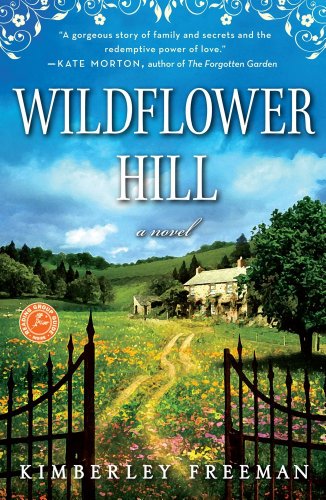
Wildflower Hill by Kimberley Freeman

Back Cover:
Spanning three generations and half the world, Wildflower Hill is a sweeping, romantic, and compelling story of two women who share a legacy of secrets, heartbreak, courage, and love. Emma, a prima ballerina in London, is at a crossroads after an injured knee ruins her career. Forced to rest and take stock of her life, she finds that she’s mistaken fame and achievement for love and fulfillment. Returning home to Australia, she learns of her grandmother Beattie’s death and a strange inheritance: a sheep station in isolated rural Australia. Certain she has been saddled with an irritating burden, Emma prepares to leave for Wildflower Hill to sell the estate. Beattie also found herself at a crossroads as a young woman, but she was pregnant and unwed. She eventually found success—but only after following an unconventional path that was often dangerous and heartbreaking. Beattie knew the lessons she learned in life would be important to Emma one day, and she wanted to make sure Emma’s heart remained open to love, no matter what life brought. She knew the magic of the Australian wilderness would show Emma the way. Wildflower Hill is a compelling, atmospheric, and romantic novel about taking risks, starting again, and believing in yourself. It’s about finding out what you really want and discovering that the answer might be not at all what you’d expect.

Review:
I'm always eager to read historical family saga novels and this novel certainly did not disappoint. Wildflower Hill was an all-encompassing, romantic story is about two women who not only share a legacy, but who are inextricably linked through secrets and similarities. Page by page, the tale unfolds, spanning three generations and two countries half a world apart - England and a secluded Tasmanian sheep farm.

The story is told through the point of view of two women – Beattie in third person narrative in the early 1900’s, and her thirty-one year old granddaughter, Emma, in first person narrative during modern time. As both women journey through life, their passions, secrets, and dreadful losses are revealed. Separately, they learn the true meaning and value of life. The two voices and character introspections are distinct and aid in separating the eras from each other. I very much enjoyed the contrast and it helped solidify the difference between the two major characters.

Wildflower Hill is women’s fiction at its finest, a journey of discovery, a family saga, beautifully written, whose main characters the reader can easily engage with. The author’s lovely prose makes this family saga an easy, enjoyable read and one I most wholeheartedly recommend.

Sunday, July 3, 2011

The Duke and the Pirate Queen

The Duke & the Pirate Queen
The Duke and the Pirate Queen is a fun roll in the hay, the ocean, the sex-fiend infested island and numerous other unlikely locations.

I have to admit, I won this book from Goodreads and thought there would be more exotic setting and characterizations. I'd have to say those things are not the book's strong points. There was more eroticism than I'd expected and erotic romance is not my normal read. At times I wanted the story to move forward without the interruption of one more sex scene.

However, if you lust after a steamy adventure and voyeurism on the high seas, this book is a must read. Leave a comment and one lucky winner will receive a free copy.

Monday, June 13, 2011

The Taker by Alma Katsu


Synopsis

On the midnight shift at a hospital in rural Maine, Dr. Luke Findley is expecting another quiet evening of frostbite and the occasional domestic dispute. But the minute Lanore McIlvrae—Lanny—walks into his ER, she changes his life forever. A mysterious woman with a past and plenty of dark secrets, Lanny is unlike anyone Luke has ever met. He is inexplicably drawn to her . . . despite the fact that she is a murder suspect with a police escort. And as she begins to tell her story, a story of enduring love and consummate betrayal that transcends time and mortality, Luke finds himself utterly captivated.

Her impassioned account begins at the turn of the nineteenth century in the same small town of St. Andrew, Maine, back when it was a Puritan settlement. Consumed as a child by her love for the son of the town’s founder, Lanny will do anything to be with him forever. But the price she pays is steep—an immortal bond that chains her to a terrible fate for all eternity. And now, two centuries later, the key to her healing and her salvation lies with Dr. Luke Findley.

Part historical novel, part supernatural page-turner, The Taker is an unforgettable tale about the power of unrequited love not only to elevate and sustain, but also to blind and ultimately destroy, and how each of us is responsible for finding our own path to redemption.


Summary


In Alma Katsu’s debut novel, The Taker, readers will enjoy a tale of passionate love that delves into the possibilities of immortality. There are three narratives that run through several centuries from earlier centuries to present day.

The story is revealed at a slow, but steady pace that grasps the readers interest and attention with every page read. It begins in a modern day hospital with a doctor treating a young woman suspected of murder and then goes into the past as she reveals her history and immortality to him. Lanny’s passionate and abiding love for Jonathan is beautifully portrayed – the author capturing its profound depth and impact. Even the villain, Adair, captured my attention, sometimes likeable and sometimes not. A truly three dimensional character.

For readers disenchanted with the trend for paranormal and vampire stories, this is a perfect alternative. The underlying theme of immortality is believable and real, portrayed through normal humans instead of unreal/strange beings.

I thoroughly enjoyed the historical parts of the story the most. The author did an excellent job with historical details and social norms of the time. There were plenty of plot twists to keep me engaged to the very end. This story within a story can be equally enjoyed by men as well as women and is sure to be a bestseller.

Hidden Voices by Pat Lowery Collins

Hidden Voices: The Orphan Musicians of Venice

Hidden Voices is the tale of Anetta, Luisa and Rosalba, three orphaned girls; their desires, their failures and successes give life anew to Venice and the music of Antonio Vivaldi.

This book is filled with the power of young love, passion and music. Because of Mrs. Collins’ deft characterization skill, as well as my own musical background, I had a hard time putting it down.

The three girls, Anetta, Luisa, Rosalba and several of the lesser characters are written with such telling, pointed dialogue and actions that there was no one in this book who didn’t “pop” into real life. Just as important, Baroque Venice also comes alive. See the Punchinello plays, Carnival, the Commedia dell’Arte, consume fritelle and Italy with these girls.  Viva Italia.

Was the book perfect? Perhaps not if one prefers a straight forward, genre-esque plot. There’s no need to save the world or even Venice in “Hidden Voices.”  I do not want to give any spoilers, so I will simply say that the hope of requited love is stretched throughout the book for all three characters, though happy ever after is never the point.

Read Hidden Voices and witness a vibrant culture that’s not normally the focus of historical novels. You won’t be sorry, and when you leave this book behind, you’ll say, as I did, “Brava, Maestra. Brava.”

To win a copy of Hidden Voices, please leave a comment. The winner will be chosen June 15th.

Wednesday, January 12, 2011

A Perfect Bride For Mr Darcy by Mary Simonsen


Convinced that the lovely Elizabeth Bennet is her brother's soul mate, Georgiana Darcy enlists her clever and not at all snobbish cousin Anne de Bourgh in ensuring that pride and prejudice aren't able to keep these two hearts apart. All is going according to plan until Lydia Bennet brings scandal on the family by eloping with George Wickham, and Darcy is called away from Elizabeth's side before he has a chance to propose. It will take all Georgiana and Anne's considerable matchmaking talents to ensure that Elizabeth and Darcy are reunited in time to claim their happily ever after.

Pride and Prejudice is my all time favourite novel, so my first instinct was not to like this story, or see the point. However after a chat with the blog owner, she explained this fitted into a genre called ‘Fan Fiction’, i.e. spin offs of classic works whose characters are taken and sequels to the original are produced. 

This is a new concept to me, but with that explanation on board, I persisted and found ‘A Perfect Bride For Mr Darcy’ is in fact a regurgitation of the original story with virtually the same cast of characters. This version proved quite interesting, in that it shows the introspection and motivations of other characters - which Austen left for her readers to work out for themselves.  I suppose if you have read Pride & Prejudice and didn’t understand why the characters behaved in the way they did this book fills in some of the blanks.

As the novel went on, I found I really liked Ms Simonsens’s style and she does have a clever way with satyr and irony which I feel Ms Austen herself would have admired. The author did, I felt, take liberties with not only the characters, giving them direct quotes from the original and not all in the right places – but changed some of the plot by giving Jane Bennett a suitor other than Mr Bingley, giving more prominent parts to Georgiana Darcy and Anne de Bourgh and we also see events through the eyes of Mr Darcy. However for those, like me, who always felt Mary Bennett was sidelined, the author does provide a happy result for her.

The fact Elizabeth and Darcy were destined to be together and will mange that in any variation of the theme, will not come as a surprise, however the culmination of their misunderstood love is not as exciting nor as satisfying as the original.

I did enjoy Ms Simonsen comments on the political situation at the time, which helped give a view of what is happening outside the drawing rooms of the main characters – an omission Jane Austen is famous for.

My main criticism of this version of Miss Austen’s classic, is the fact the author has introduced a sexual element.  Not only is Lydia still a virgin after three weeks in a boarding house with Wickham, a detail of which I didn’t see the point as she still insists on marrying him, but Darcy, in his pursuit of Elizabeth, has explicit sexual fantasies about her.  I realise I must be old fashioned where my romances are concerned, but Austen was the queen of sexual tension and she kept the bedroom door firmly shut!

I would very much like to read a story Ms Simonsen has composed herself, for she is an accomplished and skillful writer whom I feel could achieve more than the regurgitation of a story that didn’t need any embellishment.  However for ‘Fan Fiction Enthusiasts’, ‘A Perfect Bride For Mr Darcy,’ would be a good addition to their reading list.


Monday, December 20, 2010

The Spurned Viscountess by Shelley Munro


Reviewed by Mirella Sichirollo Patzer

Take a gothic castle, a dark mysterious viscount, and a mystery surrounding a murder, and some paranoral elements, and you've got a fun romantic who-dunnit. 

This light-hearted gothic romance is set in Georgian England in the year 1720. Rosalind is a young woman blessed with a second sight. As she travels to wed her future husband, Lucien Viscount Hastings, a brooding widower, she experiences flashes of his previous life with another woman. Upon arriving at her destination, she meets Lucien, a mysterious man who offers to release her from their impending marriage.  Yet she is determined to marry him and build a family with him.  

As Rosalind begins to piece together the puzzle of Lucien’s secret past and tries to unravel the mystery of who murdered his first wife and unborn child, she faces a round of strange accidents and disturbing circumstances, including the sudden disappearance of her maid. All the while, not only is Lucien concerned with protecting Rosalind, but he struggles to overcome the amnesia that blocks his memory so he can find a man named Hawk whom he suspects is the killer. Together the couple confront dire situations, risking their lives time and time again, until they reveal the secrets of the past.

If you are looking for something easy, this is a very straightforward, enjoyable read, ideally suited for adolescents into the world of historical romance or for adults who simply want to indulge in pure escapism.

Thursday, November 25, 2010

Désirée by Annemarie Selinko

Reviewed by Mirella Sichirollo Patzer

Désirée by Annemarie Selinko is a biographical novel about Désirée Clary who was Napoleon Bonaparte's first true love.  In this re-issue by Sourcebooks, readers will be highly entertained by one of the most comprehensive and detailed novels of France during the 18th and 19th centuries.  The scope of this novel is amazing and follows the rags to riches life of the Bonaparte family as they gained power throughout all of Europe.

Told through the eyes of Désirée Clary, it is a beautiful first person narrative about a strong, wise, courageous, and often eccentric young woman who never aspired to prestige.  Yet, destiny nudged her into the highest ranks until she found herself an unwilling and unpopular queen.  

If there is one book that will tell all about this fascinating era in history, this is it.  And what a fascinating woman Désirée was.  Well written, full of historical detail, it is an education in itself, carefully disguised as a pleasant novel.  For a fascinating insight into this very intriguing woman, I highly recommend this novel to readers.   


Désirée Clary

Before Napoleon fell in love with the beguiling Josephine, his heart belonged to Désirée Clary, the daughter of a wealthy silk manufacturer and merchant in Marseille, France. As was the mode in pre-revolutionary France, she entered a convent to receive her education. When her convent was closed because of the French Revolution, Désirée returned home to her parents.

After the death of her father, the revolutionaries arrested her brother. Désirée went to see Joseph Bonaparte who was in charge of the prisoner to beg for his release.


Joseph Bonaparte

It worked and a grateful Désirée introduced Joseph to her sister, Julie, and they were soon married.

Julie Clary

Through Joseph, Désirée met and fell in love with Napoleon Bonaparte and they became engaged.

Napoleon Bonapare

It was during their engagement that Napoleon met Josephine de Beauharnais. He broke off his engagement with Désirée and married Josephine instead.

Josephine de Beauharnais

Heartbroken, at first, Désirée returned to live with her mother in Genoa and later she lived Julie and Joseph in Rome. She was briefly betrothed to General Léonard Duphot, but on the eve of their marriage, he was killed in a riot in Rome.


After her return to France, she met and married General Jean Baptiste Jules Bernadotte and together they had a son whom they named Oscar.


Bernardotte was a leading general in the French Napoleonic army.  Désirée maintained a very good relationship with the Bonaparte Imperial family, as well as with the Empress Joséphine.  When Josephine was crowned Empress, Desiree held her train.  

Désirée enjoyed a busy and comfortable social life in Paris during her husband's long absences.  Bernardotte rose in power and acclamation.  He became Prince of Pontecorvo and later was elected to the throne of Sweden.   

Throughout her life, Désirée was not interested in politics, but because of her good connections, she was often used for political purposes by her husband and Napoleon.  

Unlike her husband, Désirée did not like politics and she remained in Paris for most of his career.  Désirée visited Sweden, but struggled with court intrigues, the cold weather, and was treated with disdain.  She never wanted to be a queen and hated to be so far away from her family.

The Swedish Dowager Queen found her spoiled and undignified, and Désirée's ladies, made matters worse by encouraging her to complain about everything.

Dowager Queen Hedwig Elizabeth Charlotte

She further described Désirée as good-hearted, generous and pleasant when she chose to be and not one to plot, but also as immature and a "spoiled child" who hated all demands and was unable to handle any form of representation.  She described Désirée as "a French woman in every inch," who disliked and complained about everything which was not French, and "consequently, she is not liked."

Désirée departed from Sweden for health reasons and returned to her beloved Paris where she remained for twelve years, leaving her husband and her son behind. 

In Paris she did her best to avoid politics during the difficult period when Sweden was at war with France. However, her house at rue d'Anjou was watched by the secret police, and her letters were read by them.

When Napoleon was defeated in the year 1814, she gave refuge to her sister, Julie.  Bernadotte came to Paris, but once more returned to Sweden without her.  He left behind Count de Montrichard at Désirée's household as his spy to report to him if she did anything which could affect him.

While in Sweden, Bernadotte took a mistress, the noble Mariana Koskull.  Dubbed Desideria by the Swedes, Désirée held receptions in Paris as the queen of Sweden on Thursdays and Sundays, though she still used the title of countess.  After many years of separation from her son, they were briefly reunited in 1822 in Aachen.

Crown Prince Oscar Bernadotte

In 1823, Désirée returned to Sweden together with her son's bride, Josephine of Leuchtenberg; the visit was initially to be but a short one.

Josephine of Leuctenberg

On 21 August 1829, Désirée was crowned Queen at her own request.  She was the first commoner to become queen since Karin Månsdotter in 1568.

She did her best to be active as a queen, a role she had never wanted to play, partaking in balls and parties and royal appearances.  Désirée soon grew tired of her royal status and wanted to return to France. However, Bernadotte refused to allow her to go.  

She liked spending her summers at Rosersberg Palace and visited Swedish spas. The court was shocked by her informal behaviour.  Every morning, she visited Bernadotte in her nightgown, even though he often met with his council in his bedchamber at that time of day.  Désirée was always late to dinner so they stopped having meals together.  Bernadotte preferred to have his meals alone.  She kept late hours, going to bed late, and waking up late each day.

The Swedish court never became endeared to her and they considered her eccentric.  At Rosersberg Palace, she liked to take walks in the park at night, but because she was afraid of bats, she instructed her ladies-in-waiting to walk ahead of her dressed in white to detract the bats from her.

Her eccentricities

When Bernadotte died in 1853, she wanted to return to Paris, but remained in Sweden due to her intense fear of sea travel.  During this time she became even more eccentric.  She went to bed in the morning, got up in the evening, ate breakfast at night, and drove around in a carriage through the streets, in the courtyard, or wandered around the corridors of the sleeping castle with a light.  Désirée made unannounced visits, and sometimes she would take in children from the streets to the palace and give them sweets even though she could not speak a word of Swedish.  On the day she died, she entered her box at the Royal Swedish Opera just after the performance had ended.

Désirée died in Stockholm on 17 December 1860 and was buried in the church at Riddarh.


Sunday, November 14, 2010

Tories: Fighting for the King in America's First Civil War


Review by: L. Gregory Graham

A good history book transports the reader back to an era; a great history book causes the reader to reflect on current events through different eyes and different times. Tories does that. Halfway through the book I began to wonder which side our current crop to Tea Party Patriots would have chosen during the Revolutionary War, and by the end of the book, I was wondering which side I would have chosen.

I found the book unsettling, but in a good way. Before cracking the covers, I knew a little more about the Revolution than was taught in high school history, but not much. I had this mental picture of wise forefathers leading a united citizenry against a clearly repressive King George. Patriots shot at Hessians and Redcoats and then returned to their farms where their neighbors esteemed them, and the Scottish settlers on the frontier naturally rallied the Patriots.

Unfortunately, all this is wrong. Our forefathers led a small but noisy faction backed by no more than one third of the populace. Patriots in the middle and southern colonies probably killed more of their loyalist neighbors than they did Redcoats and Hessians, and the Scottish immigrants on the frontiers tended to side with the mother country.

The British were undoubtedly ham fisted in their approach to the colonies, but they were well intentioned, and had good reason to tax the colonies. They had spent a great deal of money protecting the colonists during the French and Indian Wars. So was their taxation without representation? Yes, but it wasn’t taxation without reason.

Probably the most eye-opening subject in the book was the way colonist turned on colonist. Long Island Sound, New York and New Jersey turned into no man’s lands where lawlessness prevailed, where neighbor burned out neighbor, and personal vendetta clothed in partisanship ruled the day. Both sides used confiscation, hangings, rape, theft and arson to compel the other side. Terror became the chief tool of militias on both sides. Our heroes could get pretty depraved.

Mr. Allen displays our forefathers in all their pride, greed and stubbornness. They fight for the wrong reasons, fail to see the larger picture, dissert General Washington by the thousands, and switch sides the minute it appears that one side is winning over the other. In short, out sainted forefathers behaved like assassins and bullies.

Patroits drove a hundred thousand loyalists out of the colonies at the end of the war. Most of them ended up in Canada where the British encouraged them to settle to counteract the huge number of French.

“Today, four to six million Canadians—about one-fifth of the population—claim a Tory ancestor. Most Canadians believe that their nation’s traditional devotion to law and civility traces back to being loyal, as in Loyalist.”

One wonders how our nascent nation managed to survive when they willingly threw out so many good, hard working people.

I take hope in the fact that the passions that festered into looting, pillaging and rape did not tear the newly forming nation apart. If that is the case, then the current round of conservatives and liberals bickering will not damage the union. We are so much stronger than that.

Who should read this book? I would recommend it to anyone trying to understand America. We never were a unified people. One gets the impression that today’s conservatives are yearning to go back to a time when controversy did not exist, when your neighbors looked like you, and thought like you. This book underlines in red the fact that such a mythical time never existed. We have always been a contentious people. Controversy and political passions have been our meat and drink from the beginning.

If you seek the good old days, look around you. It doesn’t get any better than this.

Thursday, October 28, 2010

The Diamond of Drury Lane by Julia Golding


This novel is an historical fiction story aimed at children. Mr Sheridan the playwright finds an orphaned baby and brings her up in the Drury Lane Theatre, naming her Catherine [Cat] Royal. She lives there as a sort of mascot, maid-cum-runabout at the theatre where her main job includes tidying, and acting as a prompt during shows.

Cat overhears Mr Sheridan and a man named Marchmont talking about hiding a diamond in the theatre, this thus starts the problem which spans the entire novel 'Where (or who) is the diamond?'.

This story is written from Cat’s viewpoint as a child who knows she was unwanted, but feels privileged to lead a life behind the scenes of the theatre, running errands, watching the best shows and plays in London and sleeping amongst the costumes in the attics. 

After an accident with one of the props, Cat ends up dangling from the platforms above the stage. Pedro, a young black boy who has a genius for the violin, saves her life but then runs off, Cat goes to find him and they run into  a local gang of criminal boys led by Billy ‘Boil’ Shepherd– but attracts some punishment herself.  Cat is gutsy and charming, and also pragmatic – in that she shrugs off life’s injustices as something she has been dealt and must put up with.

The story begins in the luscious atmosphere of the theatre and extends to the filthy alleyways and markets of London which are Cat’s playground. She mingles with the high and low of society, from the actors on stage to the lords and ladies in the stalls to the barrow boys in the grimy marketplace. The tale is packed with local colour and authentic detail. There is, of course the mystery of the diamond to be revealed too.

I found this story and Cat’s characterisation delightful, and as an introduction for young people to the world of historical fiction, an excellent book and highly recommended.

This novel is part of a series which includes: "Cat Amoung the Pigeons", "Den of Thieves", "Cat O'Nine Tails" and "Black Heart of Jamaica".


Thursday, September 16, 2010

Fatfingers: A Tale of Old New Orleans by Charlie White

Reviewed by: L. Gregory Graham

Etienne is a simple man. What he wants most in life is a profession that is less hard on his hands. His sobriquet, Fatfingers, comes from the damage he does to his digits as a carpenter. Unfortunately, Nova Scotia in 1755 is not a place where the British care much about what an Acadian wants. England, Spain, and France are fighting over large chunks of North America, and if a few settlers die in the process, then so be it.

Pretty grim, right? In fact, the story is a romp through an unsettled period that rings truer in this book than it does in the history books.

The widow Partridge was a comely sort of woman, who having lost her husband to a wasting fever at the age of twenty, cultivated a lost and melancholic air that left persons of the opposite sex strangely disoriented.

That is how a very minor character in the story is described.

It was the type of air that, once having breathed it, you had to sample it again to see if it was as bad as you first thought.

That is how the smell inside an Indian lodge house is described.

Yes, it is a funny book. How does funny mix with historical novel? It mixes very well in this case. There is no time for stoical heroes, or bosomy heroines. This book deals with practical questions like who do you pay off when the French have vacated the city, and the Spanish haven’t arrived yet? Or, where do you get the flour for his bread when the Spanish governor eats at your restaurant every evening?

Etienne does what he must to survive and thus begins a story that stretches from Nova Scotia to New Orleans with side trips to South Carolina, Florida, Haiti and Cuba thrown in. Along the way he collects a motley group of characters that hang together because none of them has had a better offer. They include a former mistress to a government official in Haiti, a Spanish journalist sent to Cuba to get her out of Spain, an Indian, a former pirate turned food inspector, a former ship’s captain who may or may not be a pirate, smugglers and, of course, a boat load of angry Spanish prostitutes.

The city of New Orleans is a character also. It is a malevolent place much prone to giving its inhabitants incurable diseases, where anything left untended succumbs to rot, or sinks out of sight in the firm mud that passes for dry land. It is an immoral place where the major economic activity is smuggling. Drinking, rioting and knife fights are the entertainment. The city resists all attempts by the various authorities to bring law and order to the masses. One gets the impression that it was named New Orleans only because the names Sodom and Gomorrah had already been taken.

Etienne is pragmatic; he opens a restaurant, makes excellent food, and pays off anyone who comes through the door demanding a bribe. Unfortunately, nothing stays simple for long. Soon he becomes a smuggler to buy flour from the British to make the rolls and breads that governor craves in his restaurant. His brother-in-law, the Indian, is wounded on a smuggling run requiring that they kidnap a surgeon from Pensacola; the woman he loves is accused of murder and witchcraft requiring a rescue from a prison ship in Havana harbor; half-hearted revolutionaries plot government overthrow at dinner at his restaurant; and a Yankee bounty hunter by the name of Cudgel tirelessly dogs him at every step.

Etienne finds himself in a topsy-turvy world. Bravery and ethical behavior are punished while lying, slander, smuggling, cowardice, and drinking carry the day. Money and power are always corrupt, and the guilty must be punished even when they are not guilty. Where others see moral turpitude, Etienne sees opportunity.

As busy as he is trying to stay alive, Etienne still finds time to invent Cajun cooking, and develop the perfect mixed drink for Kentucky bourbon if only he could remember the ingredients the next morning. Yes, it is that kind of book.

I would heartily recommend this book to anyone who is tired of the standard fare in historical novels. These characters come off fresh and funny. The women rescue the men, the men rescue the women, Etienne becomes a hero only after every other option is closed to him, government at its worst is subverted, and life goes on in a tiny town on a small rise beside a very muddy river.

Tuesday, August 24, 2010

Wounded Spirits by April Gardner


Amid the ruggedness of frontier America, Adela McGirth and her family struggle to carve a new life for themselves. When a handsome young military officer declares his love for her and intention to marry her, Adela hesitates. She is unsure whether she loves him enough to marry him.

Life on the American frontier is fraught with discord. Soon, a dispute between the natives and the settlers surfaces and explodes into a raid on the fort where Adela and her family have sought safety. The slaughter results in the deaths of hundreds. Away at the time, Zachariah McGirth, Adela’s father is unaware of fate that befalls his family. His wife, Adela and one sister survive and are taken as captives, while Elizabeth is slaughtered. Zachariah vows to revenge their deaths.  Adela soon learns what is important in life. 

Totka is a peaceful Creek warrior caught between his friendship with the Whites and the hate of the Red Stick for the white man. He finds himself reluctantly in charge of the McGirths.

Wounded Spirits is a Christian novel of early America. It starts slowly, but the plot becomes riveting during the raid, which was brilliantly written and described. It is an enjoyable read that explores the faith of one family to endure despite the impossible hardships they find themselves embroiled in.

Monday, August 2, 2010

The Price of Glory by Seth Hunter

I am delighted to introduce you to The Price of Glory by Seth Hunter. It is the third and last book of the series, which features Nathan Peake, the young English Captain with American roots. The previous titles were The Time of Terror and The Tide of War.

Captain Nathan Peake commands the Unicorn, a frigate of the Royal Navy. He is sent to intervene in France’s revolutionary war by his Navy command. England's engagement is based on loyalty to the French king; however, Nathan will find out that the struggle for the leadership in France is in truth one about power and money.

Besides all duty, Nathan secretly looks for his love Sara who was swept away by the surge of the revolution. England's plan to support the French royalists comes handy for the young, determined Captain. Sadly, his first assignment fails, and he must fear consequences. Instead, he is sent on a secret mission to Paris, right into the heart of the revolution. Soon, he is entangled in the web of foul intrigues, brute forces, and licentious indulgence. Unintentionally, he sets Napoleon Bonaparte on his way. Having redeemed himself in London, he is allowed to return to the command of the Unicorn. He joins Captain Nelson's fleet which rushes to thwart Napoleon's plans to invade Genoa. Only now, Nathan finds an opportunity to slip away to visit a secret meeting place to see whether Sara is still alive. At the end of his quest, he'll find help from an unlikely place.

Author Seth Hunter
Once again, Seth Hunter manages to weave an action filled tale into the fabric of historical events of revolutionary France. The inclined reader is introduced to celebrities of English and French history alike. As the tension rises, there is a touch of humor, a certain laissez-faire in the tale that provides relief. Captain Nathan is a likable man, who does not always succeed. Not Mr Perfect at all and maybe that makes him so real. The language is easy to read but not simple, naval idioms are cut to an easy-to- understand level, and the frequent change of scenery provides enough opportunity to add atmosphere.

The series will appeal to adventure loving readers, but will disappoint the romance lover. If you enjoy adventures written from a male perspective, and maybe are interested in that time frame (1795) then you will find The Price of Glory to be a very enjoyable read.

Friday, May 21, 2010

The Bad Queen: Rules and Instructions for Marie-Antoinette by Carolyn Meyer

The Bad Queen: Rules and Instructions for Marie-Antoinette by Carolyn Meyer

In the 18th Century, Archduchess Maria Antonia Josepha Johanna von Habsburg-Lothringen (Antoinia) is the youngest daughter of the formidable Empress Maria Theresa of Austria. Strict, politically astute, and demanding, the Empress seeks to arrange the most beneficial marriage for her youngest daughter. At the age of 12, on the brink of entering womanhood, Antonia is promised to Louis-Auguste, Dauphin of France, son of King Louis XV. In preparation for the wedding, the Empress subjects Antonia to intense training, which included painful operations to straighten her teeth, lessons in French and etiquette, dancing, and fittings for a most elaborate wardrobe.

On May 7, 1770, Antonia was officially handed over to France to marry the Dauphin, leaving behind all that she knew of her life and relinquishing her Austrian heritage. Maria Antonia is transformed to Marie Antoinette. She is wed by proxy to her new husband and is brought to the court of Versailles where everything is new and strange. Court etiquette is so cumbersome, its rules so intricate and smothering, that she finds herself immediately unhappy, restrained beyond her imaginations. To make matters worse, she soon learns of her unpopularity with the French who dub her “Autrichienne” (The Austrian bitch).

Although a friendship blooms between her and her new husband, lovemaking does not occur and Marie-Antoinette soon faces additional pressures to produce an heir. Seven years after their marriage, she delivers a daughter. Thereafter, several more children including two male heirs.

After several years, her frustration with court life reaches a crescendo and she decides to shun the stifling rules of the court and indulges herself. She orders elaborate new gowns and creates a towering new hair style. Amidst numerous parties, she learns to ride horses and wears breeches to do so. She even commissions the creation of an entire farm village complete with servants and architectural structures. Her spending knows no bounds. And all the while, the French people grow poorer, hungrier, and angrier.

This is the first novel I’ve ready by Carol Meyer, but it won’t be the last. It was one of the best novels of Marie Antoinette I’ve encountered. Although it is considered a Young Adult novel, it transcends all demographics and will appeal to adults too.

To research this novel, Carolyn Meyer travelled to Marie Antoinette’s homes in Austria and France. She walked the hallways of the castles and gardens to obtain the essence and a deep understanding of this fascinating woman of history. The result – a credible, profound story told in first person narrative that portrays Marie Antoinette’s life in a credible, larger than life way. The novel covers her life from her early youth to the day of her death. Her portrayal of this tragic queen who was so young and naive and ill prepared for the intrigues of the court is truly poignant and beautiful. A must read for women of all ages!

Tuesday, April 27, 2010

The Tide of War by Seth Hunter

‘The Tide of War’ is the second book of a historical adventure series by Seth Hunter. It is 1794, and Captain Nathan Peake is promoted to post captain of a ship of the line. His first assignment has him hunt down the best frigate of the French fleet, which threatens to interfere with American and British interests in the Gulf of Mexico.


The British admiralty assigns Nathan with a challenging task. He is to succeed the murdered captain of the Unicorn and to sink the French frigate Virginie, which is on a secret mission to spread rebellion from the Antilles to New Orleans. Nathan travels to the Caribbean with American agent Gilbert Imlay at his side. Gilbert is a shady figure who may serve more than one master. On board of the Unicorn, Nathan learns not only about her secrets and mysteries, but also that her disgruntled crew is in no way fit for battle. He has to grow quickly into a post captain’s shoes as there are not only hurricanes and witch curses to be dealt with, but also intrigues and betrayal.

Seth Hunter managed to write a middle book of a series of three that keeps the reader turning the pages. He paints a colorful picture of location and people. The hero is allowed to have flaws and weaknesses. Cleverly told, the story flows with its twists and turns, and the added grains of humor make the read even more delightful. Even the book’s nautical aspects are delivered enjoyably for landlubbers like me. The book feels authentic and realistic, and can be understood without having read the first one of the series, ‘The Tide of Terror’. I recommend ‘The Tide of War’ to readers who enjoy historical adventures.

'Really engaging, Seth Hunter has a more natural storyteller's eye than O'Brian... well wrought and deftly told' - Daily Telegraph
'A compelling read, imaginative, knowledgeable, fast-movin...full of twists and turns' - Naval Review

Thursday, April 22, 2010

Excerpt: A Cruel Harvest

As the vessel cleared the harbour, the chained villagers were led through a hatchway into the confines of the main hold. The hold was layered with tiers of decking so that they could be arranged in rows, each deck placed no more than fifteen inches above the lower one. Under this system a surprisingly large number of bodies could be accommodated. The space between each tier was so narrow that a person was unable to turn on either side but was forced to lie flat. Every available portion of room was utilised, and the captives were squashed together, their manacled arms and legs overlapping.

Brannon had only regained consciousness a while earlier; he was tottering shakily on his feet, and now his stomach heaved when he caught a whiff of the stench inside the hold. It was vile, like rotten meat, and he fought to suppress a wave of nausea. Behind him one of the other captives vomited; he heard it splashing near his feet, and immediately the insufferable smell worsened.

It was difficult to see in front, the hatchway providing the only means of light. They were pushed along a narrow aisle by the decking and one by one allotted to a space. The crew worked diligently, securing loops on the chains through rings bolted to the bulkheads. Brannon was desperate to avoid this fate, being shackled down like a dog, but with the manacles restricting his hands and legs there was no chance of him mounting a fight against the brawny Arabs. As if to remind him of this fact, one of them cuffed him hard in the ear and shoved him on to the decking.

He found himself bundled beside two other men and could only squeeze his long frame between the tiers with great difficulty. There was barely enough room to lift his head, much less to move his body. He feared suffocation and took deep breaths to steady himself, though that was difficult in the foul, torpid airs of the hold.

‘Looks like we’re to be bedfellows,’ the man next to him grumbled.

Brannon recognised him as Pat Browne, a retired sailor who rented a farm near Dromkeen. ‘Who are they, Pat? What are they doing with us?’

‘You don’t want to know, young Ryan.’

With their prizes now safely stowed, the crew climbed out and shut the hatch, plunging the hold into darkness. A moment of silence passed. Then somebody began to sob in some corner, and this triggered off a clamour of wailing and lamenting. People wept and cried out to God, or yelled angrily, demanding answers. The cacophony of human anguish made it impossible to converse with anyone, and Brannon closed his eyes, trying to shut them out. He was dazed and confused, still unsure of what was happening or who the fearsome-looking foreigners were. This nightmare, however, was one he couldn’t wake from.

Tuesday, April 20, 2010

A Cruel Harvest by Paul Reid

Paul Reid’s debut novel, A Cruel Harvest, is an irresistible tale that intertwines romance and adventure in one breathtaking sweep. Reid’s book transports the reader to faraway places with striking realism: from the verdant, wind-blown Irish coastline, to the squalor of a slave ship, to the opulence of a sultan’s palace, and to the desolate sun-scorched deserts of Morocco. This book will not only capture your imagination, but your heart, as well.

The story begins with two young lovers, Brannon Ryan and Orlaith Downey, whose lifelong future together is clearly fated. But when Moroccan pirates raid the tranquil little village of Dromkeen, their courtship is cruelly interrupted as Brannon is seized and tossed into the hold of a cramped and filthy ship. For those captives who survive the voyage, the ordeal is far from over. Brannon’s trials begin with backbreaking labor and his plight increases tenfold when he is forced to serve in the sultan’s army. Through it all, we see a fearless and sometimes headstrong Brannon, determined to do whatever is necessary to return to his beloved.

Back in Ireland, even though Orlaith evaded capture, she soon faces her own grueling hardships. Even while trying to raise her son on her own and scratch a living out of a meager patch of land, she still clings to the faith that Brannon has survived. But as Brannon’s absence lengthens and starvation threatens her son’s very life, it seems her only hope is to wed the heartless and ignoble landowner, Randall Whitely. In her own right, Orlaith is both courageous and strong, a heroine to root for. It is impossible not to become emotionally engaged with both Brannon and Orlaith, as each battles their own moral dilemmas.

A Cruel Harvest is an ardent love story filled with majestic vistas, characters both frighteningly and heartwarmingly real and action so intense you’ll feel your pulse quicken. The contrast between the two settings, Ireland and Morocco, and the exquisite detail with which Reid portrays them guarantees that this will be a captivating read from beginning to end. This is one of those rare books you won’t rush through, simply because you’ll want to savor every word. The clarity of the storytelling and poeticism of the prose makes it a truly memorable read.


Saturday, April 17, 2010

The False Light by Diane Scott Lewis

On the eve of the French Revolution, Countess Bettina de Jonquiere flees to England with the help of a family servant, the only man she can trust. With her father dead, and separated from her mother with no idea if they will ever see each other again, she travels to Bath.

Bettina has been entrusted with a packet of documents which she is told will aid the Royalists, but when she arrives in England, there is no one to meet her. Worse, the envelope she’s secreted all the way is empty.

Penniless and stranded, she meets a brash young woman who convinces Bettina to travel with her to Cornwall, promising a job at the local Inn. Horrified at the prospect but with no alternative, Bettina enters a life of unrelenting drudgery, but finds warmth and companionship in the simple women she works with.

The locals tend to treat her with suspicion, especially the men, whose unwanted attentions Bettina does her best to avoid. The local squire has a nephew who requires a tutor, so Bettina applies to teach him to supplement her tiny income, hoping to save enough to reach London and find her mother.

Her friends at the inn tell Bettina that Everett Camborne, her employer murdered his wife, but he is the last person Bettina can question on the truth of this rumour. As time passes, Bettina’s regard for Everett makes her doubt he could be a murderer and though she fights her feelings, she falls in love with this tortured, silent aristocrat who shows her nothing but kindness.
However not everything is simple, for Bettina discovers the problems associated with Everett’s past predict a doubtful future for them both. He is not free to marry until he proves his wife dead, and their problems increase when Bettina falls pregnant.

With a ruthless brother-in-law out to ruin their happiness for his own gain, Everett is faced with the prospect of losing a nephew he loves to the boy’s uncaring father.

Bettina too has her share of problems, in that she is being stalked by revolutionaries who believe she knows the whereabouts of a fortune left by her father. Everett swears his undying devotion, but in order to protect their future life, he has to put himself in some danger.

Diane Scott Lewis’s debut novel is wonderfully researched and the reader is taken right into the drawing rooms, kitchens and taverns of the dark days of late eighteenth century England. Her recipe for lemon puffs is mouth-watering, and I was quite disappointed when they ended up in a well.

The author’s talent for making everyday conversations interesting draws the reader in, as do Bettina’s longing for her homeland, lost to her through no fault of her own.

This is a historical romance, but so much more in that Ms Scott Lewis delves into her character’s souls and makes them jump out of the page. The story finishes on something of a question, so readers will be delighted to learn that the sequel, ‘Without Refuge’ is well on its way. I for one cannot wait to read that book too and find out what life has in store for Bettina and her family.

‘The False Light’ released on April 7th by Eternal Press. To find out more about Diane Scott Lewis, please visit her website.